Call for contributions: Social Outcomes Conference 2026
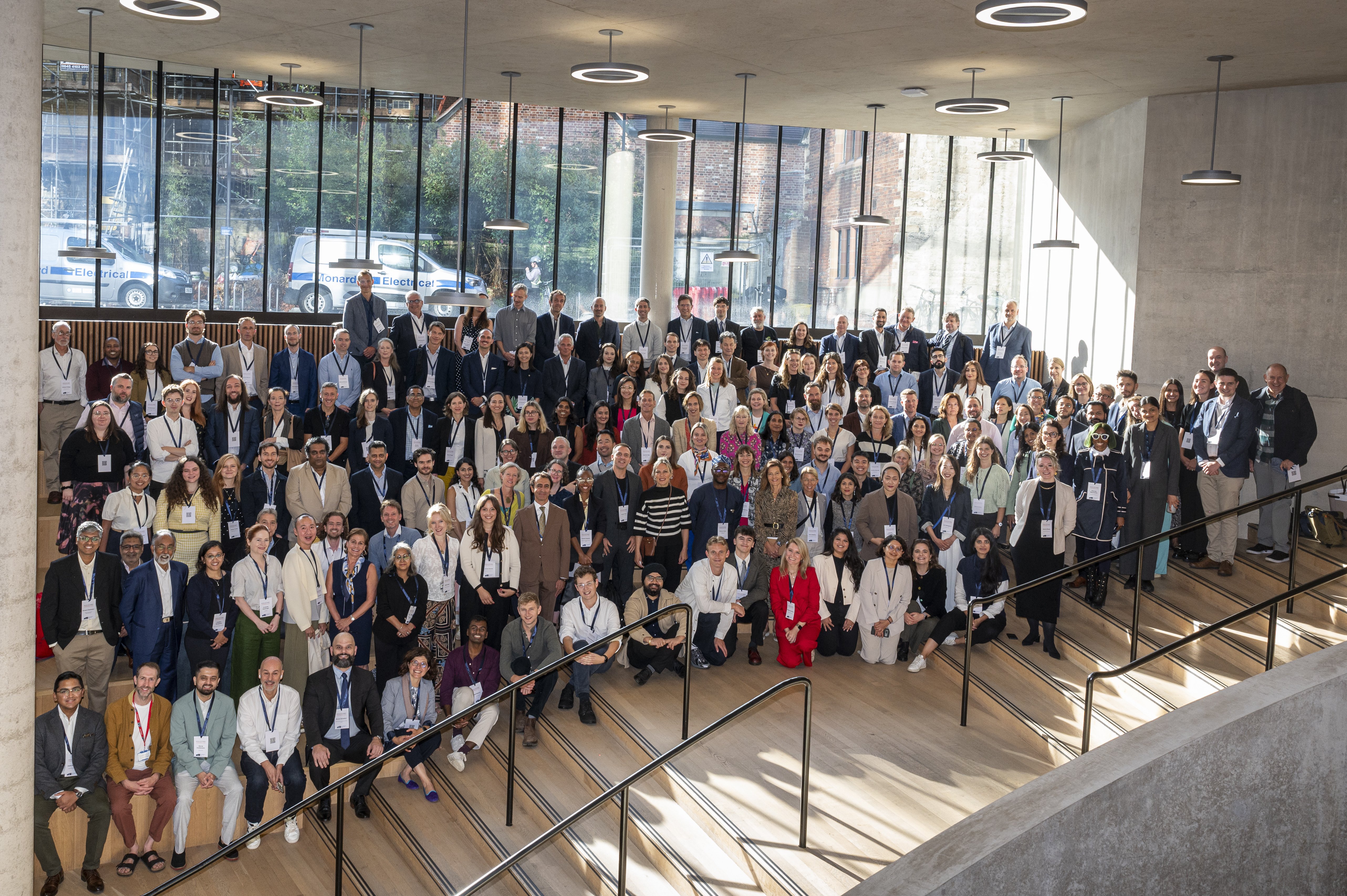
The Social Outcomes Conference is the annual convening of the world's leading researchers, policymakers and practitioners working to improve social outcomes, hosted by the Government Outcomes Lab at the Blavatnik School of Government, University of Oxford.
The Social Outcomes Conference is the annual convening of the world's leading researchers, policymakers and practitioners working to improve social outcomes, hosted by the Government Outcomes Lab at the Blavatnik School of Government, University of Oxford.
Date: Thursday 3 and Friday 4 September 2026
Location: Blavatnik School of Government, Oxford, and online (hybrid conference)
Hosted by: Government Outcomes Lab (GO Lab)
Deadline for call for contributions: 24 April 2026 (close of play)
Since 2018, we have convened a growing global community of policymakers, practitioners and researchers dedicated to improving social outcomes through cross-sector partnerships, offering a space for shared learning and meaningful engagement with the emerging evidence.
The early editions of the conference had a particular emphasis on innovative, outcomes-oriented forms of cross-sector partnerships such as social impact bonds (increasingly referred to as social outcomes partnerships or social outcomes contracts). This has since served as a springboard for exploration of wider questions:
- How can we build effective cross-sector partnerships that drive impact?
- What does it mean to embed meaningful outcomes at the heart of public services?
- How can data and evidence be used to inform smarter, outcomes-focused decision-making?
- What lessons can be applied across sectors to improve policy design and delivery?
- How can government best steward the delivery of social services through an outsourced dynamic?
Though the topics have expanded, the conference remains committed to bridging academia, policy, and practice for better social outcomes, emphasising inclusive evidence-building and open knowledge-sharing. We encourage participants to embrace this interdisciplinary exchange, recognising that learning from those outside one’s immediate field is a valuable opportunity. We are committed to rigorous research and evidence-driven insights, ensuring that academic advancements inform best practices in policy and implementation—and that, in turn, real-world practice shapes the research agenda.
Attendees can expect a dynamic environment that fosters cross-sector dialogue, deepens understanding, and advances the field of outcomes-focused work. As in previous years, the conference will feature discussions on the latest thinking and findings from academic research alongside insights from emerging practice across different geographies, disciplines and policy areas.
Invitation to shape this year’s Social Outcomes Conference
We develop the conference programme in collaboration with the wider community of academics, practitioners, and policymakers. We do this through our annual call for contributions, where community members submit their proposals for speaking at the conference. The call for contributions is open to all – whether you are a researcher keen to share your latest work with a global audience; a policymaker working on pioneering initiative; or a practitioner leading outstanding work on the ground that others would benefit from learning from. Every year we get over a hundred submissions which the GO Lab team carefully review in line with the criteria and priorities laid out in this call.
At previous editions of the conference, we heard how new forms of partnerships are needed to enable governments to respond effectively to the increasingly complex and pressing social challenges that citizens across the world face. A growing body of scholarship is pointing to the importance of balancing accountability and flexibility in these partnerships, but practical examples of how to do so successfully remain limited.
For this year’s edition of the Social Outcomes Conference, the central question that we will be exploring is:
Do relational cross-sector partnerships hold the key to better social outcomes?
As more organisations – within and outside government - are becoming more deliberate about weaving both robust accountability mechanisms and flexibility for iteration and data-led adaptation into their partnerships, are there approaches really making a difference? If so, what does it take to develop and nurture successful partnerships that balance formal and relational practices? What does it take to grow this approach? What capacities and skills are needed? What are the limits of this approach? How do we move from the transactional to transformational in purpose-driven partnerships?
Conference focus areas
To explore and shed light of these questions, we are launching an open call for contributions. We are particularly interested in:
- Examples of innovative practice and partnerships that have successfully embeded mechanisms for both accountability and flexibility
- Evaluation and research insights that help clarify the impact of these partnerships and what success looks like in practice
- Practice and theoretical perspectives on the challenges and limitations of adopting a formal-relational contracting approach in cross-sector partnerships
- Expert insights on how the use of AI-powered tools may help address these challenges
- Practical examples and reflections on the capacities and enabling environment required to nurture more accountable, adaptable and person-centred partnerships.
To help frame the programme, we anticipate clustering discussions around the following broad areas. These are not formal tracks, and contributors are not required to select or align with a specific cluster in their submission. Instead, they illustrate the range of topics we hope to bring into conversation:
- Pioneering approaches to contracting for public value (procurement, governance, data-led delivery)
- Innovation in funding models for more accountable, adaptable and person-centred cross-sector partnerships (outcomes-focused partnerships, outcomes funds etc.)
- Data and evidence for measuring what matters (including innovative uses of AI-powered tools)
- Enabling environment and tools for sustainable and scalable approaches to purposeful partnerships
Formats to apply for
Selected submissions will be featured in one of the session formats outlined below. When completing the submission form, please indicate your preferred format. Contributors may propose an individual contribution (e.g. deep dive, poster), or suggest a curated session format (such as a workshop) that brings together multiple speakers or perspectives aligned around a shared theme.
The final allocation of formats will be made by the conference convening team to ensure a balanced and engaging programme.
Spotlight Sessions offer a focused exploration of innovative research, policy developments, or practice-based case studies. Each session begins with a concise presentation, followed by an interactive, audience-led discussion that probes the implications, challenges, and lessons emerging from the featured work.
Deep Dive sessions bring together a panel of speakers to explore complex topics in greater depth. Designed to foster rich dialogue, these sessions integrate academic insight, policy perspectives, and practice-based experience to examine a shared theme from multiple angles.
These informal, small-group discussions centre on a specific challenge or question. In a relaxed, conversational setting, participants are invited to share their expertise, test ideas, and collectively reflect on practical solutions, all over coffee and croissants.
Our Poster Gallery lunch provides an opportunity for individuals, programmes, and projects to present their work in a visual format. This is a valuable platform to showcase research, tools, or initiatives to an audience of government advisors, civil servants, academics, and practitioners working on social outcomes.
Successful posters will be displayed both physically at the Inamori Forum and virtually on the SOC26 webpage. This format is particularly well suited to presenting a project, programme, or new piece of research or methodology in a detailed and visually engaging way.
Lead an interactive workshop designed to foster peer learning and practical exchange. Workshops should clearly specify the intended audience, key discussion question(s), and a high-level overview of the format and facilitation approach.
A dedicated session for early career researchers, led by the GO Lab’s Academic Director. This session provides a supportive platform to present emerging research, receive feedback, and engage with senior scholars and practitioners.
The call for contributions is open to policymakers, practitioners and scholars from across the globe. To ensure a rich and insightful set of discussions at the conference, we will prioritise new insights, evidence, and practice from a wide range of diverse backgrounds (different national, regional, social, academic, and professional contexts). All submissions should be grounded in robust evidence and seek to make a pragmatic and constructive contribution to the field.
If you are a policymaker or practitioner looking to share insights from your work but feel unsure about how best to format these at the conference, do get in touch with us at golab@bsg.ox.ac.uk to discuss your ideas.